
New Zealand's two great wild shellfish tell the same story twice, with opposite endings. The Bluff oyster, dredged from the cold floor of Foveaux Strait at the bottom of the South Island, is the country's national treasure — a wild, native flat oyster, never farmed, harvested under quota since the 1960s, and celebrated every May at a festival that calls itself unsophisticated and proud of it. The scallop, Pecten novaezelandiae, is the summer treat of the Coromandel and Northland coasts, pan-seared in garlic butter and eaten straight off the boat — and it has been closed to everyone, commercial, recreational and customary alike, since March 2023, while its beds try to recover. One delicacy survived its collapse because the rules held and the fishers held back; the other is still waiting for its beds to come back.
The oyster is Ostrea chilensis, known in Māori as tio para, and it grows wild on natural beds spread across the floor of Foveaux Strait, the turbulent channel between the South Island and Stewart Island — one of the few natural oyster beds left in the world. It has been harvested commercially since the 1860s, making it one of New Zealand's oldest fisheries, and it shaped Bluff itself, one of the country's oldest towns. The season runs from March to August, the peak from March to May, and no oyster is taken under two inches or under four to six years old. It nearly died twice: the parasite Bonamia swept the strait from the 1980s, cutting the population by ninety-one percent from its 1975 level by 1992, and the fishery was closed in 1993 to let it rebuild; another epidemic struck in 2000, and an estimated one billion oysters died between 2000 and 2003 alone. The stock has been recovering since 2003, helped by fishers voluntarily taking only half of what they were allowed — and by a quota system that has held since the 1960s. Only about ten million are available in a year, demand is feverish enough that helicopter couriers have carried them north, and the Bluff Oyster & Food Festival each May ends with the Ode to the Oyster, read by a man in a tam o'Shanter and tartan trews.
The scallop's story is the same collapse without the recovery — yet. Coromandel scallops fell by half in 2016; Northland fell seventy-four percent by 2020; and a 2021 survey came back alarming enough that the Government closed the Northland fishery entirely on 1 April 2022 and most of Coromandel the same month, leaving only two beds open, around Little Barrier Island and in the Colville Channel. A camera survey that winter showed those two beds in serious decline as well, and on 13 December 2022 the Minister invoked rarely-used emergency powers to shut them too. On 17 March 2023 the whole Coromandel fishery was closed under the Fisheries Act, the total allowable catch cut from nineteen tonnes to eleven, and the commercial and recreational allowances set to zero. As of October 2026 it is still closed, with no reopening decision announced. The causes are named: sedimentation smothering the beds, Victorian box dredges, and GPS letting boats find and strip the last patches with precision. The push to close it came from the community — Ngāti Hei led it — and the plan now on the table is restorative: buy back the quota, and when, and only when, the beds recover, allow hand-gathering only, never dredging again. The oyster is the lesson; the scallop is the lesson still being learned.
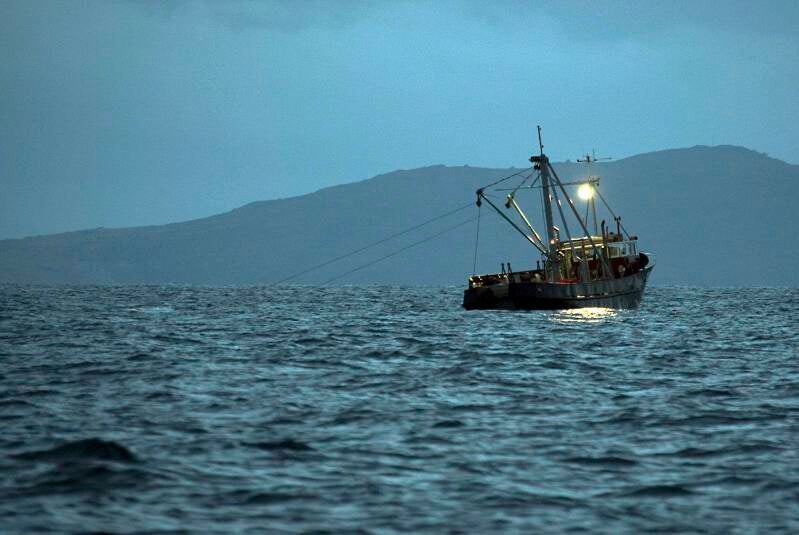
Photo: Tony Smith
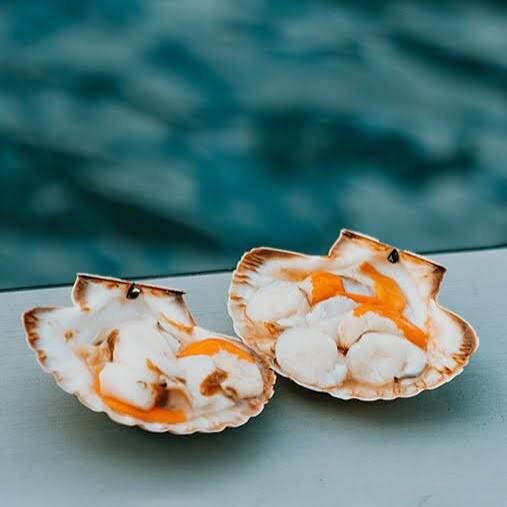


Sanford casts itself as custodian rather than harvester, under the banner "Custodians of Beautiful New Zealand Seafood". Its vision is to be New Zealand's seafood leader for quality, value and reputation, and, further, the best seafood company in the world through sustainable growth, embracing the contribution it will make towards the United Nations Sustainable Development Goals. Sustainability and innovation, in its own words, are at the heart of everything it does, pursued with uncompromising care and respect for a pristine ocean resource, and the company believes in achieving together through care, passion and integrity. It is New Zealand's largest integrated fishing and aquaculture business, with around forty-seven vessels and two hundred and ten aquaculture farms, harvesting, farming, processing, storing and marketing seafood from New Zealand waters to the world. Its roots go back some one hundred and fifty years, to Albert Sanford selling kauri-smoked snapper from his boat at Queen Street Wharf, and it now plays a leading role trialling new aquaculture and harvesting technologies, including a robotics, sensor and machine-vision monitoring platform developed with the New Zealand Product Accelerator, working towards the aquaculture industry's three-billion-dollar-by-2030 target.
Company: Sanford
Website: https://www.sanford.co.nz/
Description: Caught in the pristine waters of New Zealand, our beautiful seafood is handled with the utmost care.
Add comment
Comments