Original Kiwi

Reinventing Original — how New Zealand takes the generic and makes it iconic.

Food bank → The Free Store

A food bank asks you to prove you need help. The Free Store asks nothing at all. In the undercroft of St Peter's Church on Willis Street, Wellington, volunteers hand out the day's surplus food from the city's cafés, bakeries and restaurants to anyone who walks in — no referral, no means test, no questions asked. It is the purest expression of the country's habit of reinvention: New Zealand took the food bank, a model built on assessment and parcels, and turned it into a shop where the price tag is the thing that was removed.
Read more »

Toast → Vogel's

Toast in New Zealand means Vogel's: thick slices, dense with grains and seeds, a loaf that turned breakfast into something worth sitting down for. It did not invent bread; it made toast the main part of the meal.

Read more »

Auction site → Trade Me

Trade Me was founded in Wellington in March 1999 by Sam Morgan, a young IT consultant who built the site on a single PC in his father's office. eBay, the global giant of online auctions, had decided New Zealand was not worth a local portal — Morgan later said he benefited from that decision — and by the time eBay arrived, two years late, Trade Me already had more than half a million listings against eBay's roughly 14,000.

Read more »

Bird → Kiwi bird

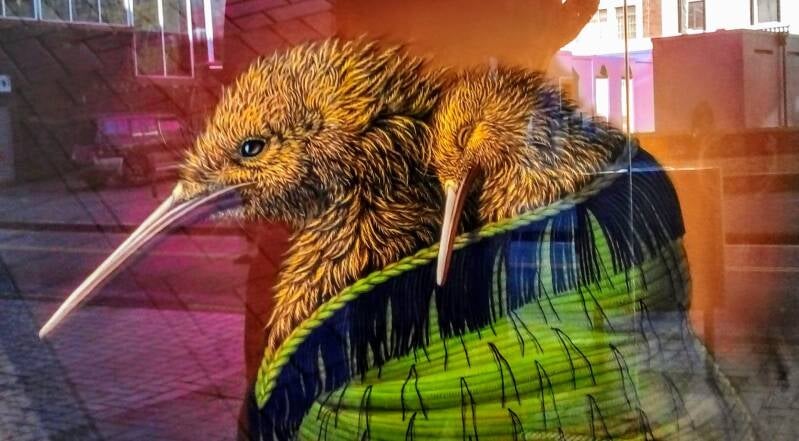
Flightless and nocturnal, with a long beak, the kiwi gave its name to a people. It cannot fly, but it became the bird that represents a country.

Read more »

Tourism → Tourism New Zealand and newzealand.com

Tourism New Zealand turned a distant country into a destination travellers wanted to see, and newzealand.com became its front door, winning Webby Awards and putting the country's landscapes within a click of anyone on Earth. It did not invent travel; it made the edge of the map feel central.

Read more »

Currency → The New Zealand dollar

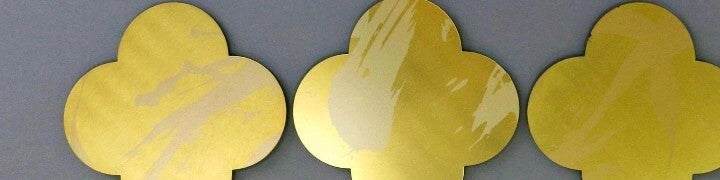
New Zealand decimalised on 10 July 1967, when the pound gave way to the dollar and the first decimal notes arrived in denominations from $1 to $100. The Queen was on the front of every one, and a New Zealand bird with the plant that went with it on the back — a fantail on the $1, a rifleman on the $2, a tūī on the $5, a kea on the $10, a kererū on the $20 and a takahē on the $100. The $50 did not arrive until 1983, with a morepork on pōhutukawa, and the $1 and $2 notes gave way to gold-coloured coins in 1991. The money was, in the main, still a portrait of the monarch.

Read more »

Wright brothers → Richard Pearse

Richard Pearse, a South Canterbury farmer working alone in a shed at Waitohi, built a monoplane from bamboo and scrap. Some who saw it say it flew, months before the Wright brothers' flight at Kitty Hawk. The proof is debated; the ingenuity is not. New Zealand's first aviator worked without a team or a wind tunnel — only a paddock and an idea.

Read more »

Greenstone → Koru / Pounamu

Pounamu is not simply greenstone. Found in the rivers and ranges of Te Waipounamu, it is a taonga — a cultural treasure carried through whakapapa, fought over, gifted and worn for generations. The koru, the unfurling frond that speaks of new life, growth and strength, is one of the forms most often carved from it, which is why the stone's protection matters well beyond the trade in the stone itself.

Read more »

Festival → World of WearableArt

World of WearableArt is New Zealand's largest annual theatrical production and its most unlikely cultural export: a design competition in which artists from more than 40 countries sculpt garments that can barely be called clothes, and models wear them down a runway in a two-and-a-half-week season at Wellington's TSB Arena before crowds of more than 60,000. It began in 1987 as a one-night promotion for a small Nelson art gallery, in a rain-soaked marquee before 200 people. It is the purest expression of the country's habit of reinvention: New Zealand took art off the wall, put it on the human body, and turned it into a festival the world now comes to Wellington to see.

Read more »

Outdoor → Swanndri

Swanndri's bush shirt became the uniform of farmers, trampers, and anyone facing a southerly — tough wool, made for changeable weather. It never chased fashion; it built gear for the country it was made in.

Read more »

Festival → LUX Light Festival

For a few nights each winter, Wellington turns its darkest season into its brightest asset. LUX is a free public light festival that takes over the city's waterfront and laneways with light sculptures, interactive installations and projections, the lights coming on at 6pm and burning into the night. It is the purest expression of the country's habit of reinvention: New Zealand took the cold, dark middle of the year — the weeks when a sensible city stays indoors — and turned it into a reason for tens of thousands of people to walk the streets after dark, together, looking up.

Read more »

Reptiles → Tuatara

Tuatara are the last survivors of a lineage older than the age of the dinosaurs, with a third eye and a slow life history. They survive on New Zealand's offshore islands, where they are protected. Evolution moved on elsewhere; in New Zealand, this lineage remained.

Read more »

Boat → Earthrace + Earthling

Two New Zealand boats, twenty years apart, both built around the same heretical idea about propulsion: that a boat could go further on less. One did it loud and fast, and was lost. The other does it silently, and is still sailing. Earthrace was the 24-metre biodiesel trimaran that set the powerboat circumnavigation record in 2008 and died in the Southern Ocean two years later, rammed by a Japanese whaling ship. The Earthling E40 is the 12-metre electric-hybrid catamaran now crossing the Mediterranean on sunshine and two and a half litres of diesel an hour. Different boats, different eras, same Kiwi instinct — redesign the engine, not just the hull.

Read more »

Coffee → Flat White

A flat white is a double shot of espresso under steamed milk so smooth it pours like silk, finished with a thin skin of microfoam and no dome of froth. In Wellington it is served as a double shot in a 140-millilitre tulip cup, or the slightly larger 150-millilitre cup; anything bigger, and the regulars will tell you it is a latte wearing the wrong name. The drink is the smallest, strongest statement of a café culture that New Zealand built from nothing in the 1980s — and like the pavlova, its parentage is a trans-Tasman argument that has never been settled. Sydney’s case rests on Alan Preston, who put “flat white” on the permanent menu at his Moors Espresso Bar in 1985, with a printed mention in a May 1983 review of the café Miller’s Treat behind him. Auckland’s case rests on Derek Townsend and Darrell Ahlers, who say they made the drink at DKD Café in 1984 and developed the milk-stretching technique that gives it its velvet texture. Wellington’s case rests on Fraser McInnes, who says a failed cappuccino at Bar Bodega in 1989 — low-fat milk that would not foam — was served anyway under an apologetic new name. The name itself is older than any of them, in print in England by 1971. The menu evidence favours Sydney; the drink’s form favours New Zealand; Wellington, by common consent of its own baristas, is the flat white’s spiritual home.

Read more »

Government building → The Beehive

New Zealand did not invent the parliament building. It reinvented it. In 1964, when the government needed a new executive wing for a Parliament House that had stood half-finished since 1922, Scottish architect Sir Basil Spence offered not another stone hall but a round tower rising in steps — a shape he himself dubbed the Beehive, after the traditional woven skep. Ten storeys and 72 metres high, it stands at the corner of Molesworth Street and Lambton Quay in Wellington, a concrete hive where the country's government works.

Read more »

Resistance → Nancy Wake

Nancy Grace Augusta Wake was born in Grass Street, Roseneath, Wellington, on 30 August 1912, and she became the most decorated Allied servicewoman of the Second World War. She was a Kiwi — part-Māori through her great-grandmother Pourewa, of Ngāti Mahanga — who was raised in Sydney from the time she was a toddler, and who always regarded herself as a New Zealander. By 1943 the Gestapo had put a price of five million francs on her head and called her the “White Mouse”, because she kept slipping their traps. A year later she parachuted back into occupied France and led some 7,000 Resistance fighters. She had reinvented herself, again and again, until she became the most wanted woman in France.

Read more »

Helicopter → Westpac Rescue Helicopter

On the morning of 10 April 1968, the inter-island ferry Wahine foundered in Wellington Harbour in a storm, and 53 people died within sight of the shore. Watching from Seatoun Beach was Peter Button, a Wellington plumber, who thought there had to be a better way. He had no money, no backing and no pilot's licence — but he bought a helicopter, learned to fly it, and set out to build the thing that had not existed that morning: a civilian rescue helicopter service that could reach anyone, anywhere, at any hour. What he built became Life Flight, and its helicopter became the Westpac Rescue Helicopter — New Zealand's first 24/7 civilian rescue helicopter service, and a second invention in how it is paid for: not by the patient, who is never charged, but by the government, a bank and the community, together.

Read more »

Music → Crowded House; Fat Freddy's Drop; Dave Dobbyn; Lorde; Bic Runga

Crowded House wrote songs sung around the world; Fat Freddy's Drop turned a Wellington jam session into a dub-soul institution; Dave Dobbyn gave the country a singalong voice; Lorde, from Auckland's North Shore, reshaped what a teenage pop star could be; and Bic Runga, from Christchurch, wrote the ballad that became the country's sixth-favourite song of all time. Five acts, five different  sounds, from one small country with an outsized presence on world stages.

Read more »

Adventure experience → Bungy / Zorb

Bungy jumping derived from a ritual leap from a tower in Vanuatu before AJ Hackett turned it into a commercial operation, with the first commercial jump from the Kawarau Bridge in 1988. The ZORB followed: Andrew Akers and Dwane van der Sluis rolled a giant transparent ball down a Rotorua hill with a person inside. New Zealand did not invent adrenaline, but it priced, packaged, and sold it internationally.

Read more »

Hemp → Hemp Connect + Hemp Farm

New Zealand did not invent hemp. The plant has been grown for fibre, food and medicine for thousands of years, its stalks turned into rope and sailcloth long before any New Zealander sowed a seed. What New Zealand did, in the space of two decades, was take a crop that the law treated as a drug and turn it into a legitimate industry — food on supermarket shelves and medicine in pharmacies, grown in Canterbury paddocks and processed in a purpose-built factory in Levin. The reinvention ran on law as much as on farming: licensed cultivation under the Misuse of Drugs (Industrial Hemp) Regulations 2006, hemp seed recognised as food on 12 November 2018, and licensed medicinal cannabis production from 1 April 2020.  In  December 2025 the Government announced the next step, and on 28 May 2026 it took effect: the 2006 Regulations were revoked, the licence to grow and handle industrial hemp was replaced by a notification to Police and the Ministry for Primary Industries before planting, and hemp was redefined as cannabis plant with no more than 1% THC by dry weight.

Read more »

Accounting Software → Xero

Bookkeeping once lived on a desktop, in a box, on one computer — the accountant's computer. Xero moved it online, so a small business and its accountant could view the same figures, live, from anywhere. It did not invent double-entry bookkeeping; it freed it from the desk.

Read more »

Tattoo → Moko

Tattooing is practised worldwide, but tā moko is a distinct tradition: a carved, genealogical language worn on the skin, in which each line records whakapapa, status, and story. As global tattoo culture expanded, moko was reclaimed and carried forward as a living cultural practice, with its own protocols, artists, and meaning — identity rather than decoration.

Read more »

Outdoor → Macpac

Macpac applied the same approach to packs and tents, built in Christchurch for the Southern Alps: gear made for the country it was made in, not for fashion. Founded in 1973 by nineteen-year-old Bruce McIntyre in his family garage in Christchurch, it began making packs because imported brands were not available, and its gear was built to stand up to New Zealand's most extreme conditions.

Read more »

Speedboat → Jetboat

William Hamilton needed a boat that could run the shallow, braided Canterbury rivers without shredding a propeller on every rock. His answer, in 1954, was a jet unit: water drawn in and forced out the back, with no propeller below the hull. Rivers that were unnavigable became navigable, and jet boating grew into a New Zealand adventure industry, with HamiltonJet units fitted to workboats and rescue craft worldwide

Read more »

Motorcycle → Fastest Indian + Britten V1000

Burt Munro spent decades hand-tuning a 1920s Indian Scout in a Southland shed until it set records at Bonneville, becoming the fastest Indian ever. John Britten built a superbike from scratch in a Christchurch garage: a carbon-fibre V1000 that beat factory teams at their own game. Neither man had a factory. Both worked from sheds, with a refusal to accept that fast motorcycles only came from elsewhere.

Read more »

White chocolate → Milkybar

White chocolate was a Swiss invention, first sold by Nestlé in 1936 as Galak, later Milkybar. New Zealand made it a childhood ritual. The Milkybar Kid — a blond, bespectacled cowboy whose catchphrase is “The Milkybars are on me!” — became, in Nestlé New Zealand's own words, a Kiwi legend, debuting here in 1980. In 2010, Rotorua's Hinetaapora Short, aged eight, became the first girl ever to play the Kid. The bar itself is not quite chocolate in this part of the world: the Australian and New Zealand version contains no cocoa butter, so it is not labelled as chocolate, and the bars sold in New Zealand are made in Campbellfield, Victoria. The reinvention was not the recipe; it was the adoption.

Read more »

Museums → Te Papa

On Wellington's waterfront stands a museum that did not merely house New Zealand's treasures but reimagined what a national museum could be. The Museum of New Zealand Te Papa Tongarewa, opened on 14 February 1998, merged the former National Museum and the National Art Gallery into a single institution, and its radical concept was biculturalism: a museum built on the partnership between Tangata Whenua and Tangata Tiriti, with its own functioning marae, a Māori co-leader, and Māori perspectives woven through collecting and display rather than confined to a single gallery. Traditionalists called it the “MTV of museums” for its audience-focused, interactive approach; the public answered with 35,000 visitors on opening day and more than two million in its first year.

Read more »

Ice cream → Tip Top

Ice cream was a treat everywhere, but Tip Top, scooped at beaches and dairies across New Zealand, became associated with Kiwi summers: the trumpet, the cone on a hot day at the beach, the dairy scoop after school. It did not invent ice cream; it became part of a national memory of summer.

Read more »

Sneakers → Allbirds

The trainer was a product of petroleum: synthetic uppers, foam soles, logos over everything. New Zealand turned it into a wool shoe. Tim Brown, a former All White, took superfine New Zealand merino — a material the footwear industry had ignored — and, with biotech engineer Joey Zwillinger, launched the Wool Runner in March 2016, after a Kickstarter campaign that raised US$119,000 in five days. The name itself was a New Zealand joke: a land with almost no native land mammals is a land of all birds. What followed was a shoe made from wool, tree fibre and sugarcane instead of synthetics, with its carbon footprint printed on the box.

Read more »

Cocoa → Milo

Milo, a malted chocolate drink from across the Tasman, was adopted into New Zealand childhoods: spoonfuls eaten dry from the tin, and the mug after Saturday sport. The recipe did not change; the ritual did, and the drink became a shared memory.

Read more »

Shell → Paua shell

Paua shells were beach finds before New Zealand craft turned their iridescent interiors into jewellery and souvenirs carrying the colours of the coastline — blue, green, and purple.

Read more »

Fruit → Feijoa

Feijoas originated in South America, but New Zealand gardens made them a national seasonal event: a few frantic autumn weeks of buckets left on doorsteps, feijoa baking, and a fruit that divides opinion. The adoption was unplanned; the country simply took it up.

Read more »

Hollywood → Weta

Peter Jackson began with a camera, a shed, and a proposition that a small Wellington team could make fantasy on a scale Hollywood owned. He built Weta around that bet: Wētā Workshop for the physical craft — miniatures, armour, weapons, prosthetics, and creatures that could be touched — and Weta FX for the digital work, including Gollum's face, Kong's fur, and the armies of The Lord of the Rings.

Read more »

Yachting → NZ Foiling Racing

The America's Cup was long dominated by wealthy syndicates. New Zealand, a country with a strong sailing culture, began winning it, and then changed the boats themselves. Foiling lifted hulls clear of the water and turned yacht racing into something closer to flight, with Team New Zealand setting the pace other teams now follow.

Read more »

Coffee → Havana Coffee

Coffee in New Zealand was once an instant granule in a jar. Wellington roasters turned it into a craft: Havana Coffee Works made the flat white a ritual and the café a second living room.

Read more »

Vodka → 42 Below

Vodka is the neutral spirit: flavourless by design, traditionally sold on purity and frost. 42 Below, a Wellington brand, did not attempt to out-distill the established producers; instead, it built a brand recognised internationally for character as much as taste. The product was standard. The positioning was the reinvention.

Read more »

Flipflops → Jandals

A rubber thong sandal exists everywhere, but only New Zealand turned it into a cultural icon with its own name, derived from ‘Japanese sandals’, its own etiquette, and its own place in the national wardrobe: beach, bach, and Friday at the office. The jandal is not better engineering. It is total cultural ownership of an ordinary object.

Read more »

Chinese Gooseberry → Kiwifruit

The fruit arrived from China as the yang tao, grown in small quantities. New Zealand growers renamed it after the national bird, bred improved varieties, built a single-desk export system, and turned an obscure berry into a supermarket staple on every continent. The fruit itself barely changed. The brand, the system, and the story did — and ‘kiwifruit’ is now a New Zealand word used around the world without a second thought.

Read more »

Wool → Merino

Wool was a scratchy fibre in decline when merino, bred in New Zealand's high country, was repositioned as the technical fabric of the outdoor industry: breathable, odour-resistant, and worn next to the skin. It was sold not as farming output but as engineering. The sheep did not change. What changed was the frame: from commodity bale to premium layer, from the farm gate to the summit.

Read more »

Honey → Manuka Honey

Generic honey is a commodity, sold by weight and priced by the jar. Mānuka honey, produced from the nectar of a native New Zealand bush, was repositioned as a premium health product through a grading system, clinical research, and a price that turned a pantry staple into a billion-dollar export. The science behind the claim has a name: MGO, methylglyoxal, found at significant levels only in New Zealand mānuka honey and the measure of its antibacterial potency. The reinvention was not the bee or the flower, but the story, the science, and the standard.

Read more »