New Zealand decimalised on 10 July 1967, when the pound gave way to the dollar and the first decimal notes arrived in denominations from $1 to $100. The Queen was on the front of every one, and a New Zealand bird with the plant that went with it on the back — a fantail on the $1, a rifleman on the $2, a tūī on the $5, a kea on the $10, a kererū on the $20 and a takahē on the $100. The $50 did not arrive until 1983, with a morepork on pōhutukawa, and the $1 and $2 notes gave way to gold-coloured coins in 1991. The money was, in the main, still a portrait of the monarch.
The 1990s redesign changed that. Series 5, released from 1992, set out to make the notes uniquely New Zealand: notable New Zealanders on the front — Edmund Hillary on the $5, Kate Sheppard on the $10, Āpirana Ngata on the $50, Ernest Rutherford on the $100 — with the Queen kept only on the $20, and a native bird in a New Zealand scene on the back of every note: hoiho, whio, kārearea, kōkako and mohua. The current polymer series, Brighter Money, released in October 2015 and May 2016, kept those themes and made them brighter and bolder, with more te reo — Aotearoa, Te Pūtea Matua — and security features that were world firsts: a holographic window holding a fern and a map of New Zealand, and a bird that changes colour as the note is moved. The $20 still carries Queen Elizabeth II; the Reserve Bank will exhaust its stock before a King Charles III note appears. The kōkako and the blue mushroom on the $50 have a story of their own — told in the blue mushroom post.
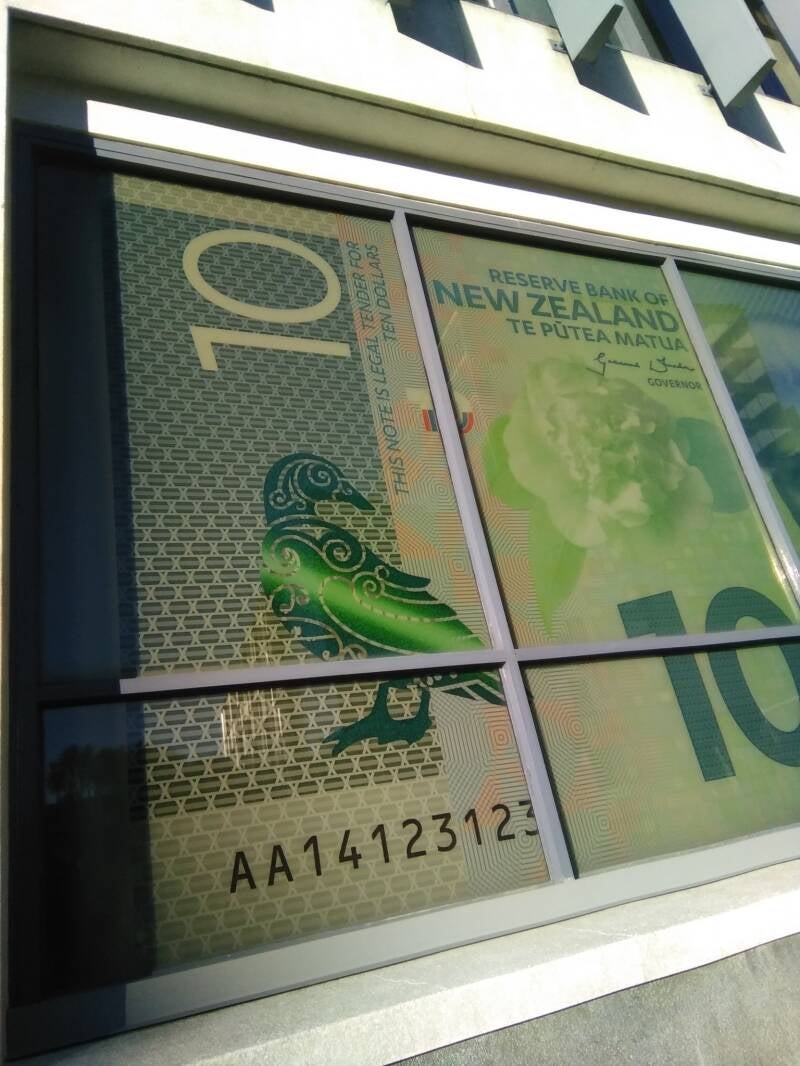
The coins tell the same story in miniature. Five circulate: the $1 kiwi and the $2 kōtuku, both gold-coloured and introduced in 1991, and the 50c Endeavour, the 20c carving of the chief Pukaki and the 10c koruru. In 2006 the three smaller coins were made smaller and lighter in plated steel, and the 5c piece was withdrawn altogether. And the currency has escaped the wallet altogether: the $10 note, whio and all, is blown up to building size on the Reserve Bank's own windows on The Terrace, across from the Beehive, and the whole coinage sits in a collector's set — the money, in the end, as a portrait of the country itself.
The Reserve Bank puts it plainly: currency has to be distinctive and with clear New Zealand visual themes, accessible, able to stand up to regular handling, resistant to being counterfeited, and with a professional design that both reflects its purpose as legal tender and is likely to appeal to a wide range of the public. When it launched Brighter Money in 2014, the Bank said it had decided to retain representation of well-known New Zealanders and flora and fauna on the notes — and to give Māori culture a stronger place, with more te reo on every note: Aotearoa, the Māori name for New Zealand, and Te Pūtea Matua, the Bank's own Māori name. The Deputy Governor called the new notes a reminder of "what an important role currency plays in our lives, and what a sense of pride and heritage our notes evoke" — and the security itself became part of the design, with a holographic window holding a fern and a map of New Zealand, and a colour-changing bird that was a world first.
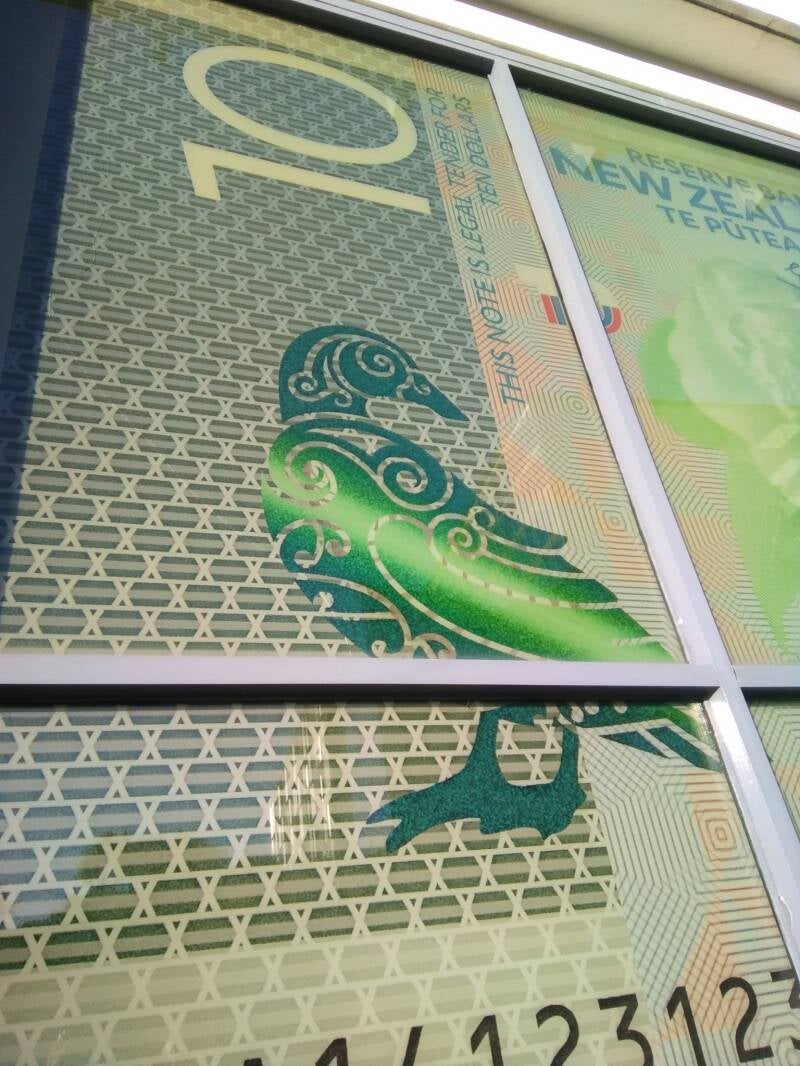
Photo: Maitland Waters

Photo: Maitland Waters

Image: Reserve Bank of New Zealand
Add comment
Comments